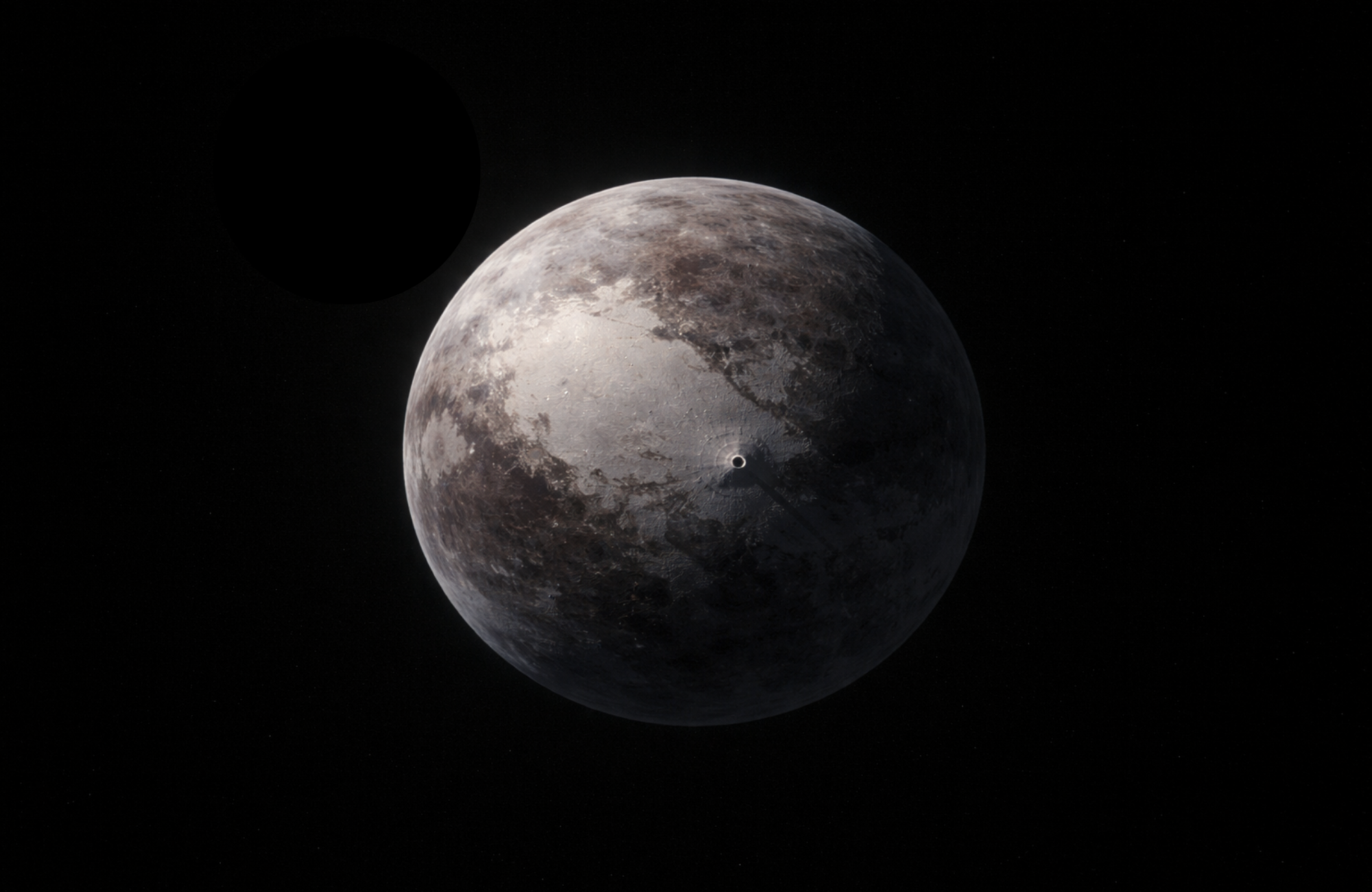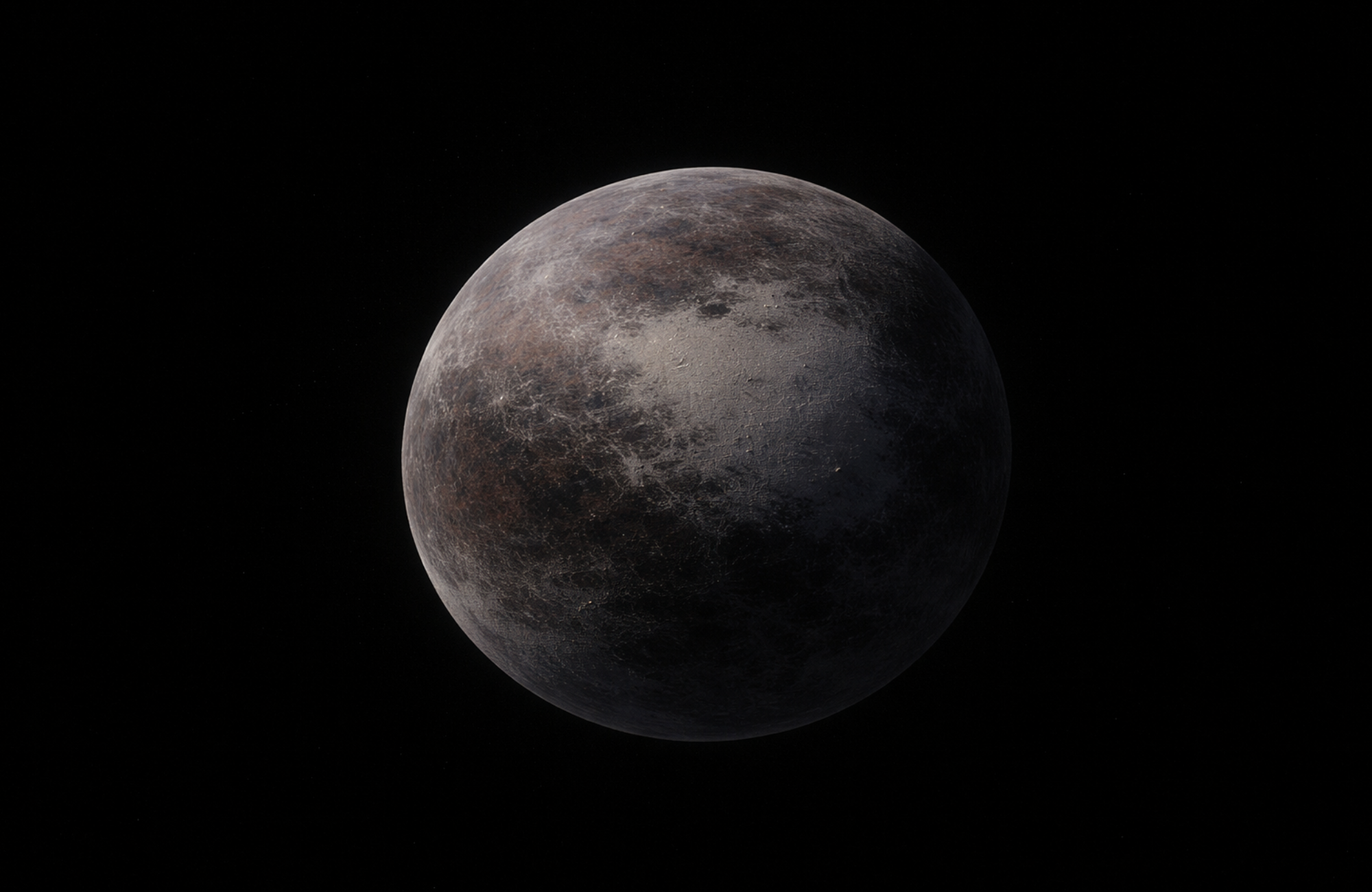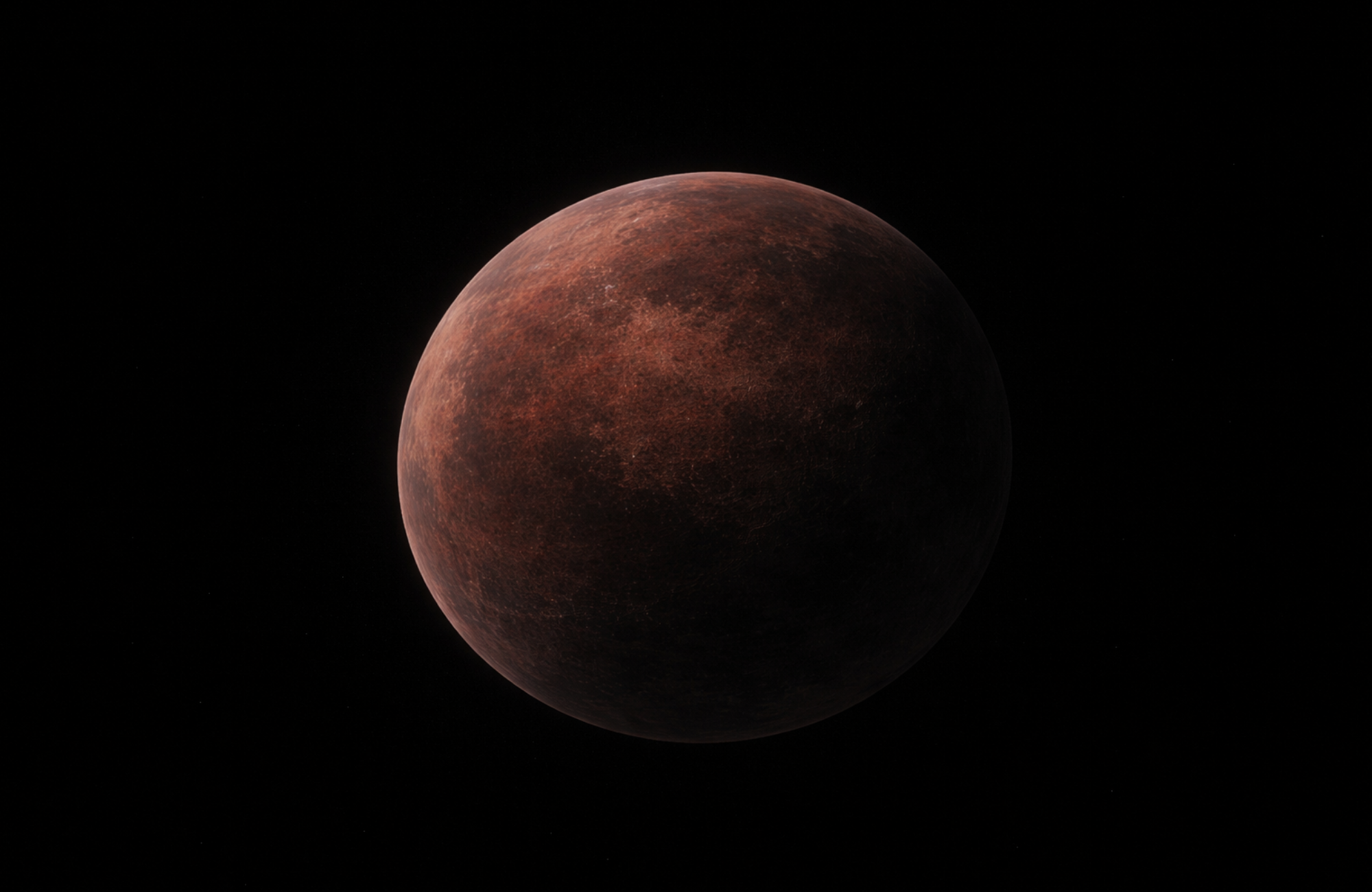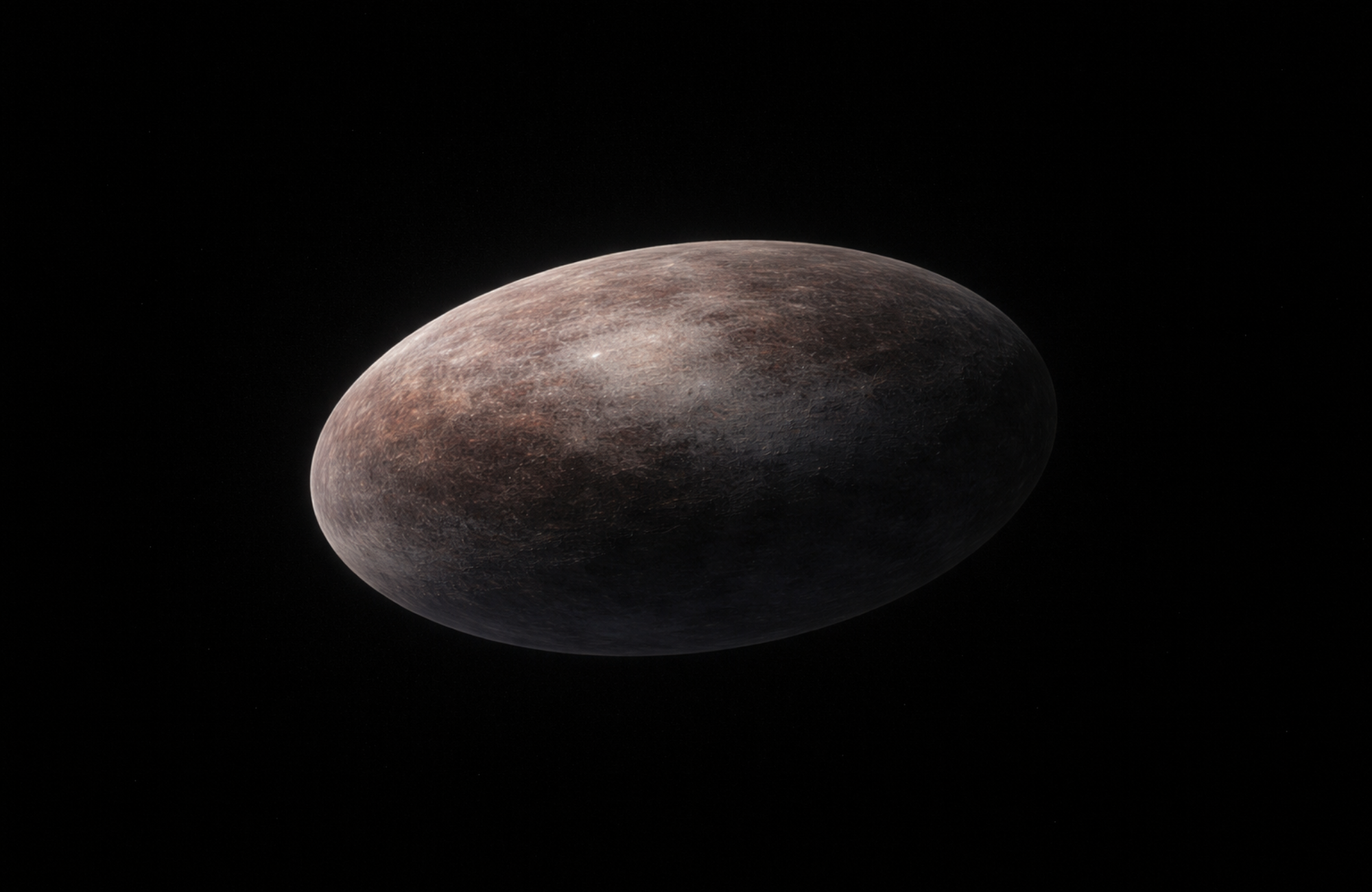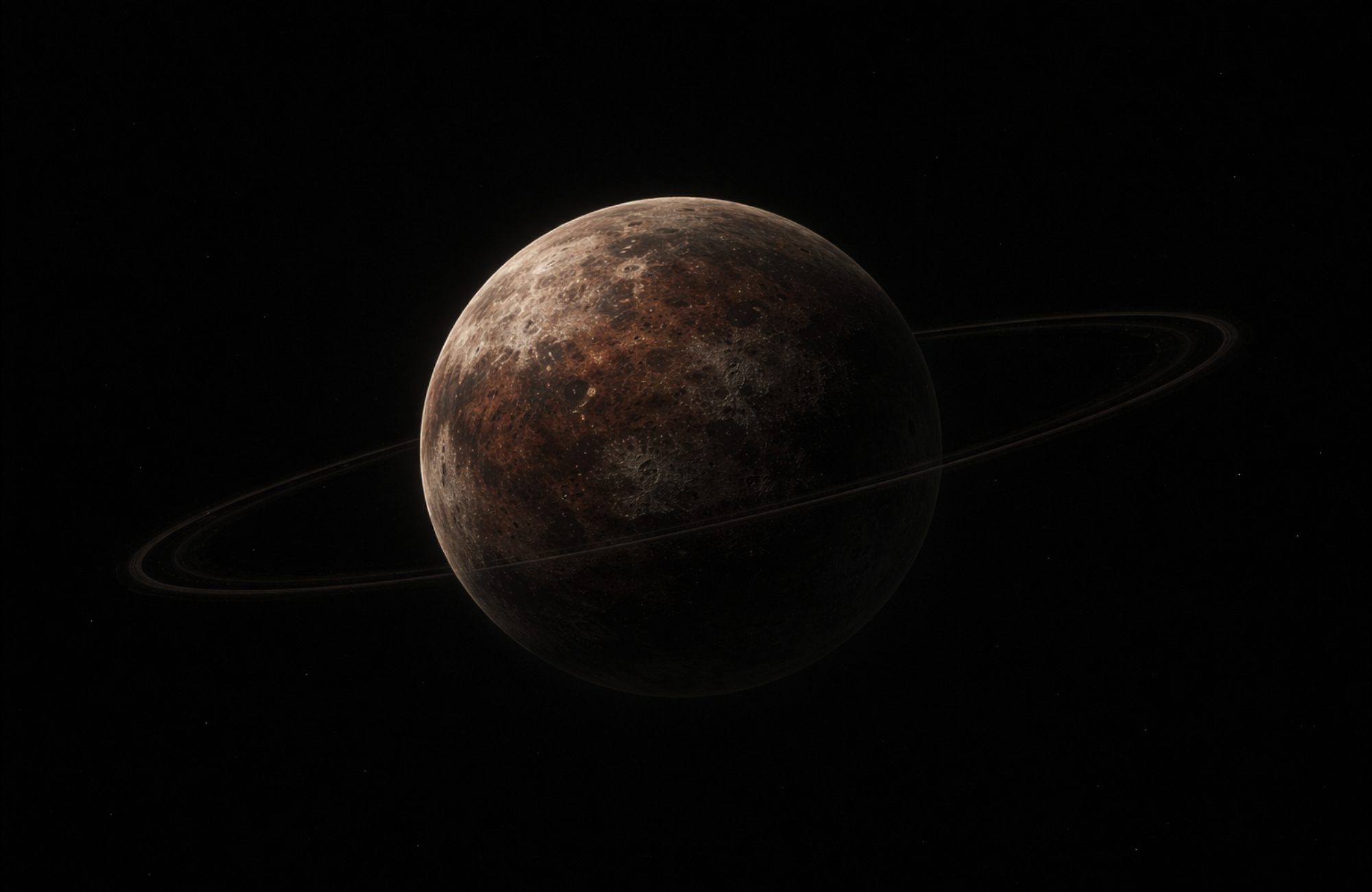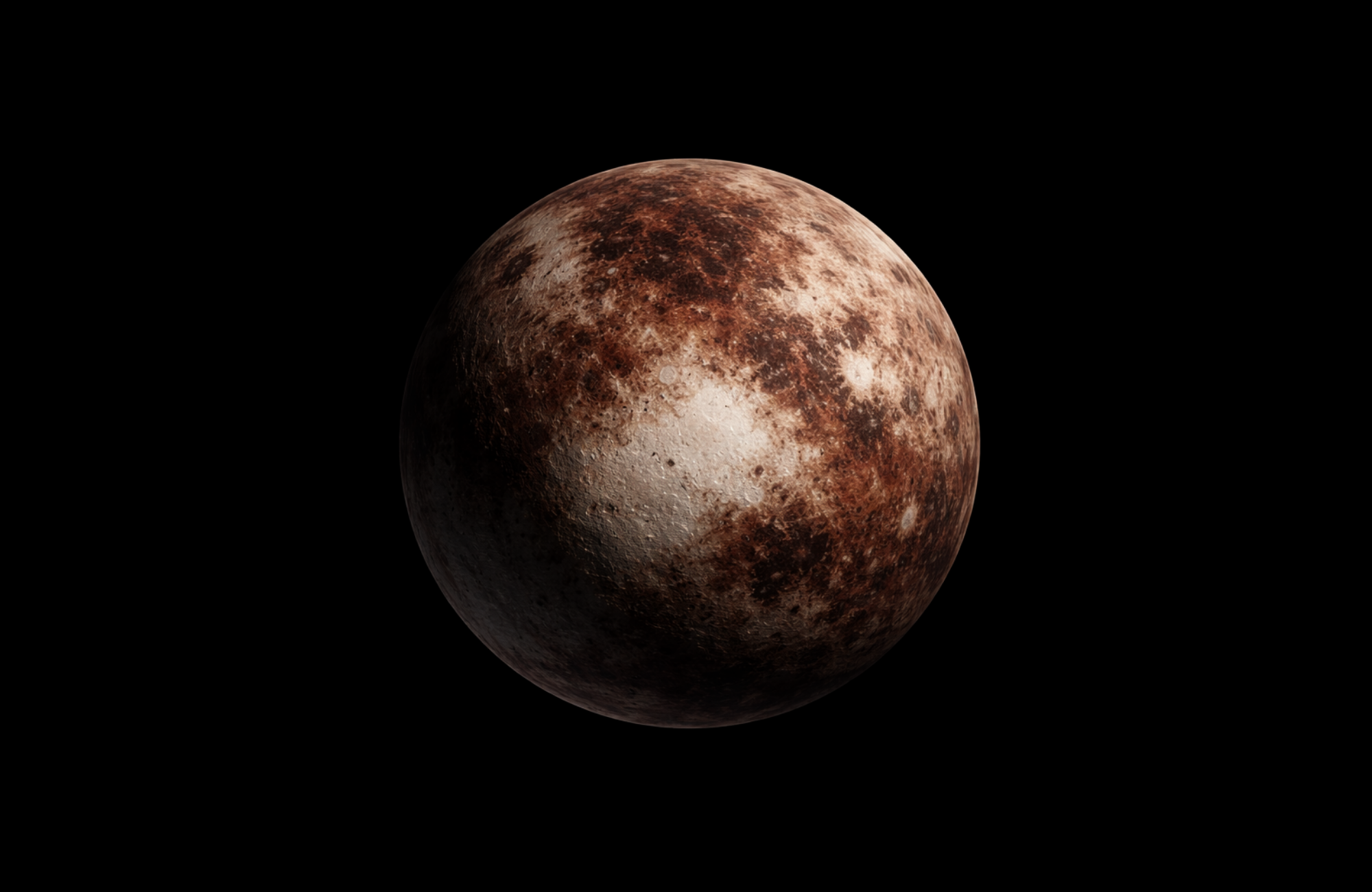
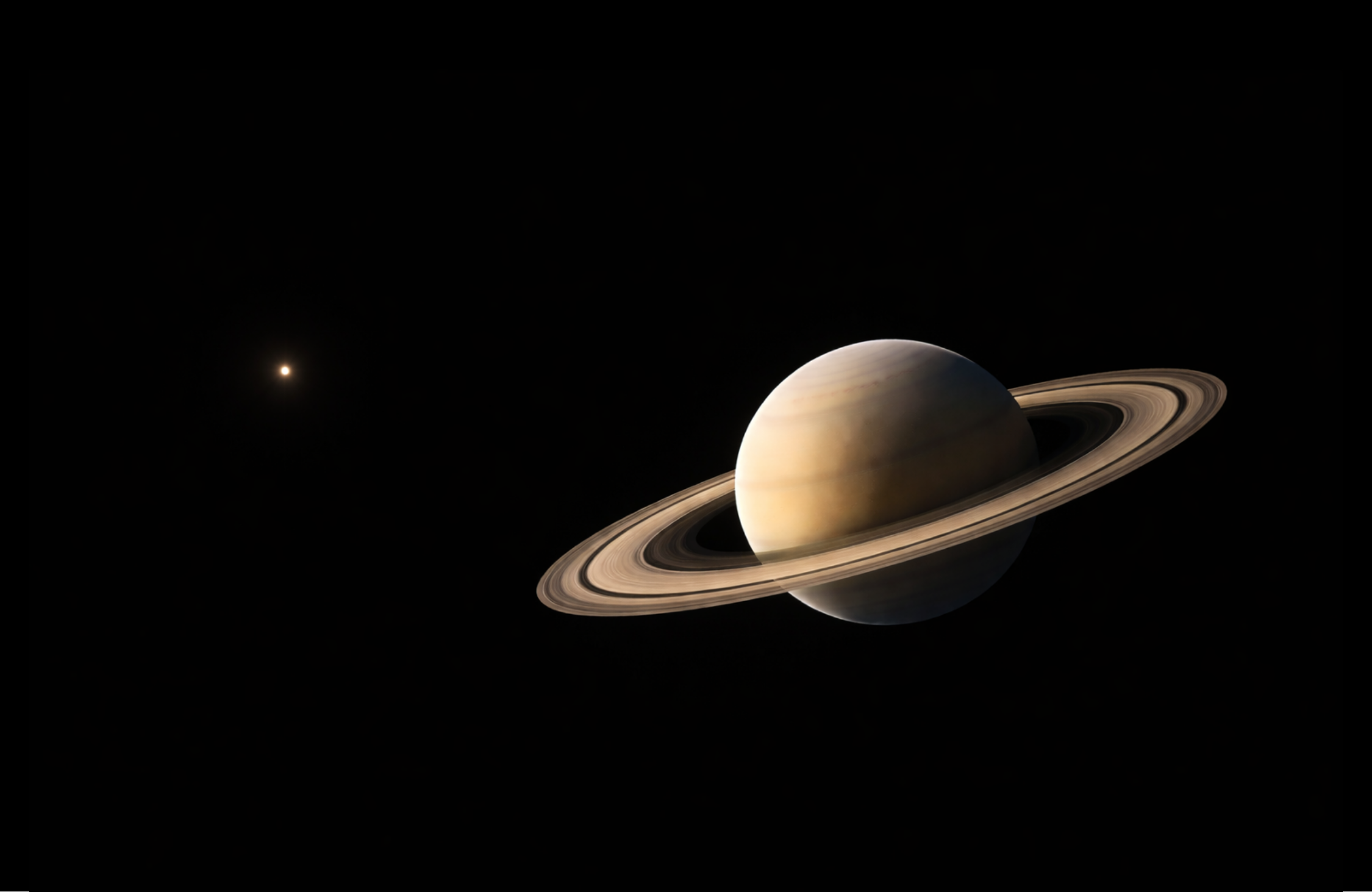
Planet Saturn and the Sun (AI-generated)
Most people imagine the edge of the solar system somewhere near Pluto, a distant world that orbits the Sun at an average distance of about 40 times farther than Earth. For decades, Pluto felt like the final frontier.
It’s not even close.
Here is the part that almost nobody realizes. According to NASA, the Sun’s gravitational influence does not end with the planets, or even with Pluto. It may extend far beyond, into a vast and mysterious region known as the outer Oort Cloud, at distances of up to 100,000 astronomical units from the Sun.
If that estimate is correct, it means Pluto is more than 2,500 times closer to the Sun than it is to the true outer edge of the solar system.
And beyond that distance, space does not simply stop. It gradually fades into something far stranger.
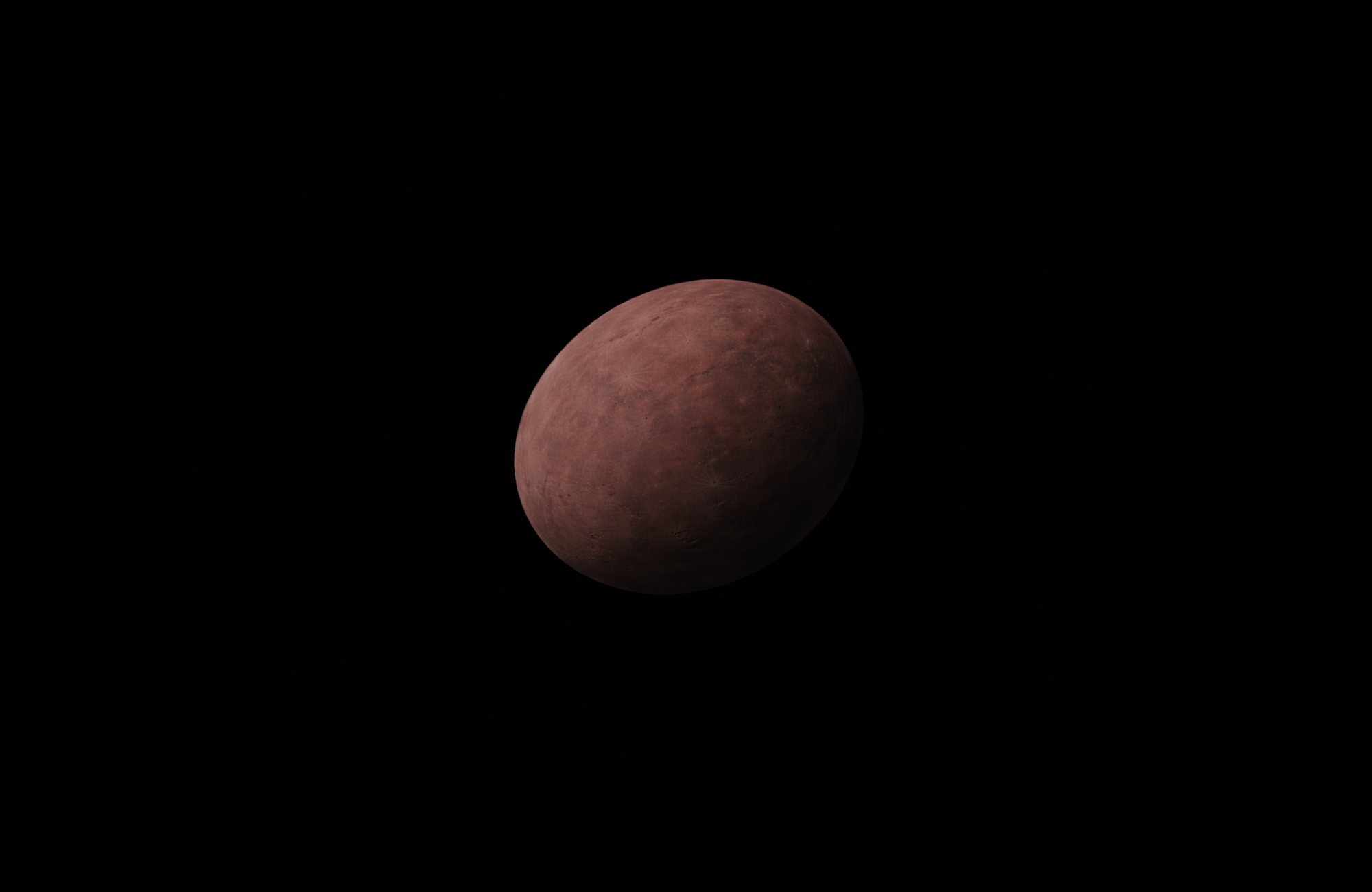
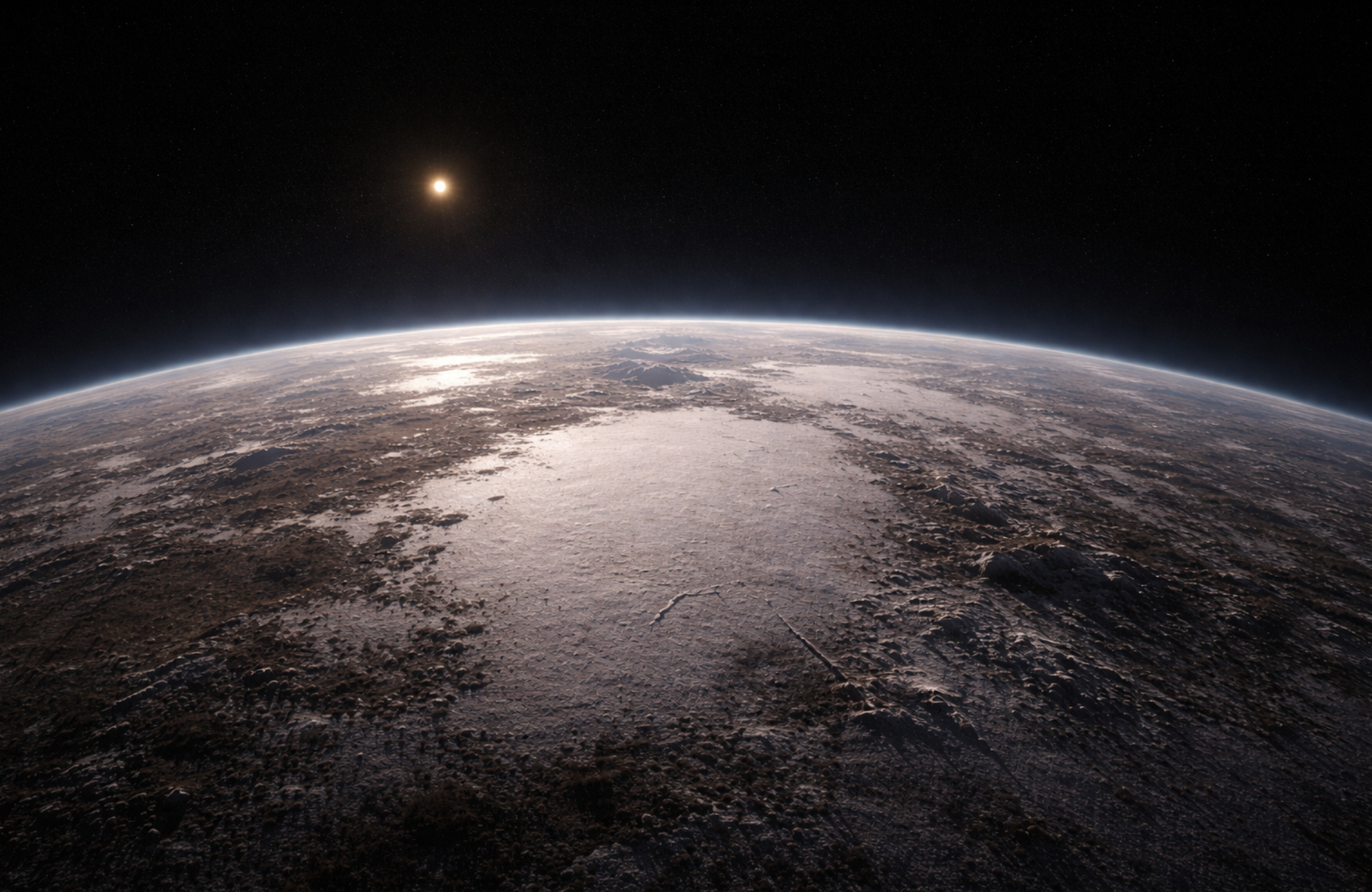
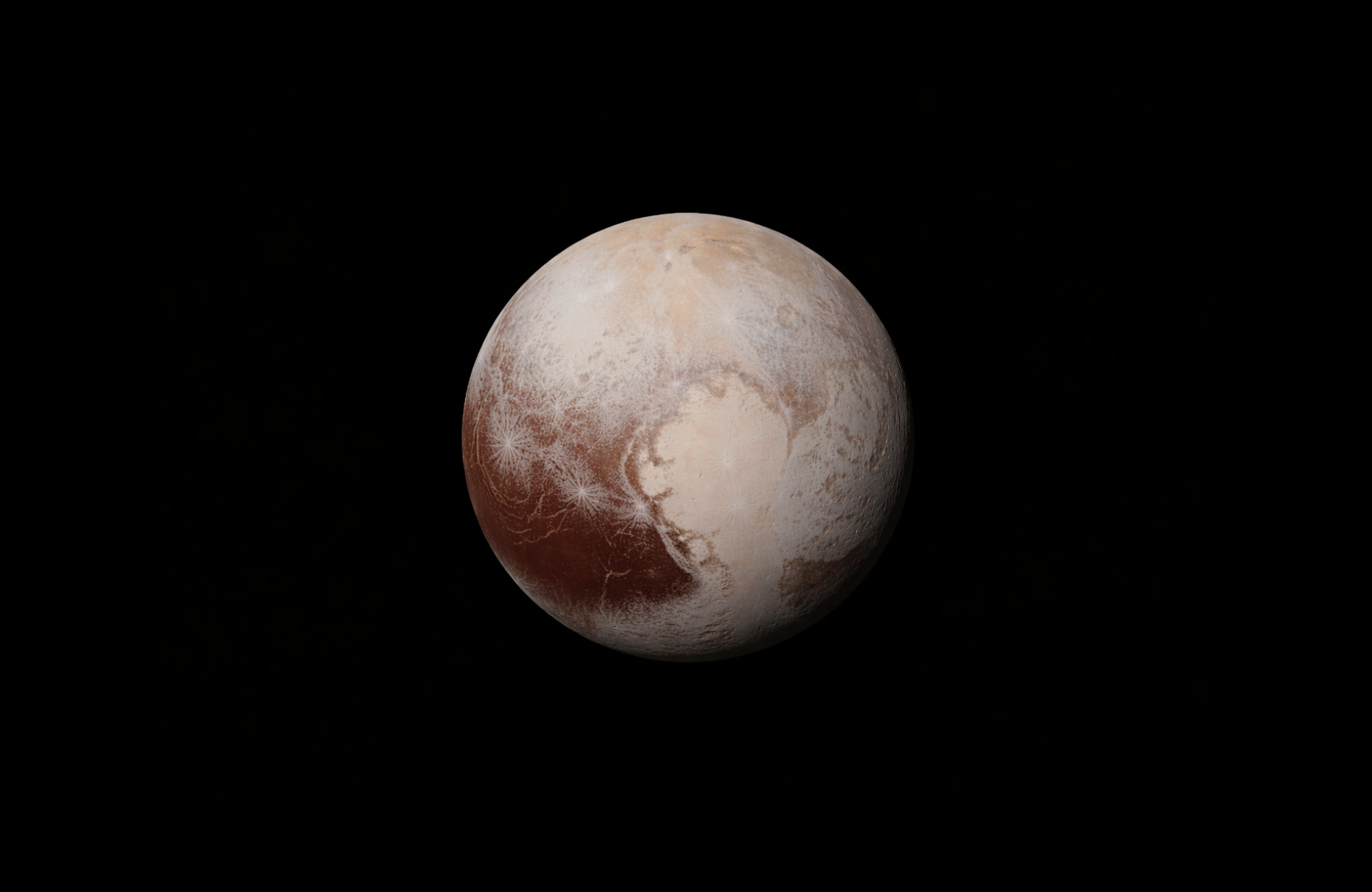
Pluto’s icy surface (AI-generated)
For decades, Pluto was nothing more than a faint point of light, barely distinguishable even through powerful telescopes. That changed in 2006, when NASA launched the New Horizons spacecraft to perform the first-ever close-up exploration of the distant dwarf planet.
The New Horizons spacecraft was built to travel faster than any previous mission to the outer solar system. Launched aboard an Atlas V rocket, it left Earth at such speed that it passed the Moon’s orbit in only a few hours. Even so, the journey to Pluto was immense. The spacecraft spent more than nine years in flight, traveling nearly 6 billion kilometers through the cold outskirts of the solar system.
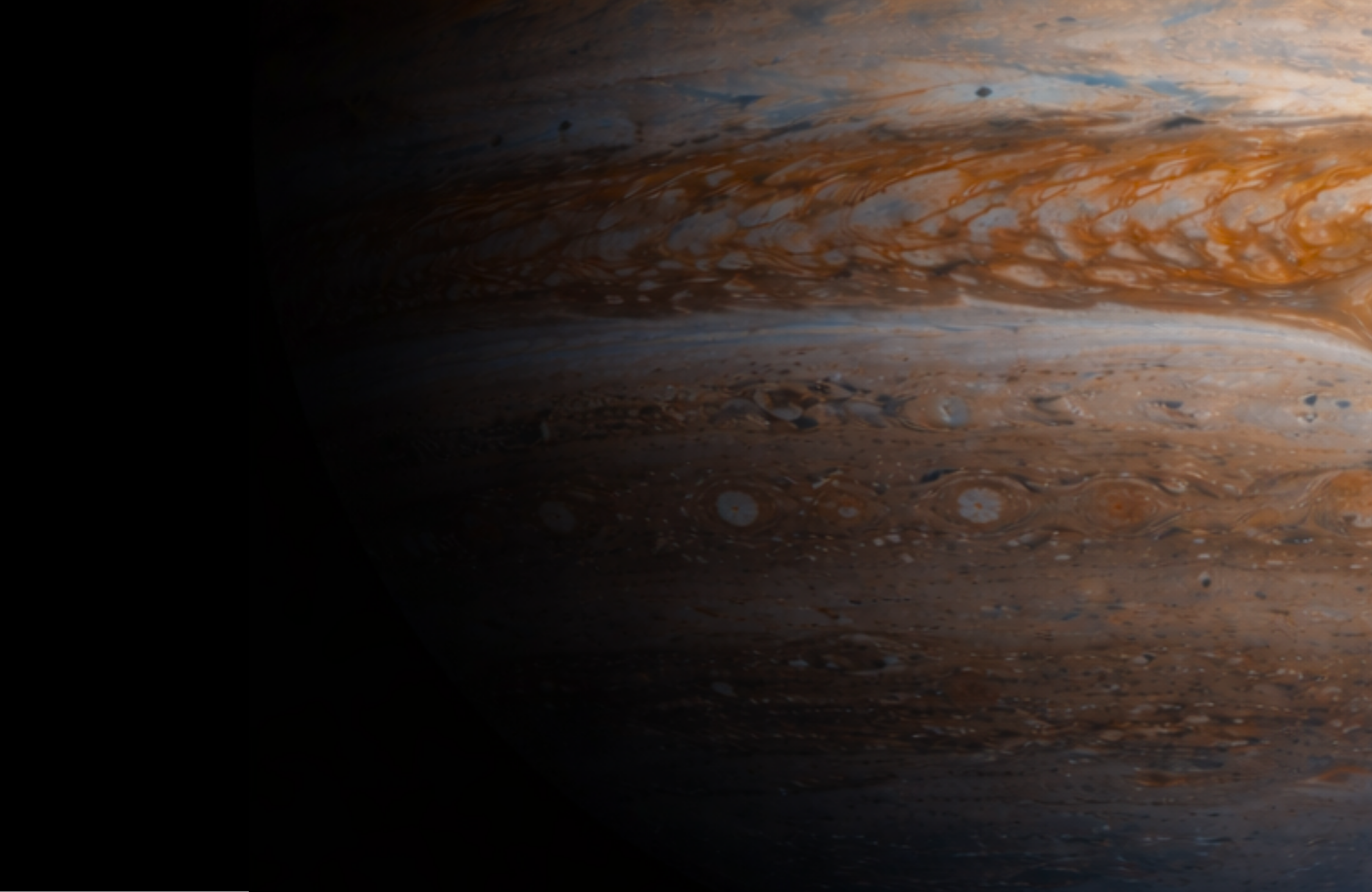
Jupiter’s cloud bands (AI-generated)
A gravity-assist flyby of Jupiter in 2007 boosted its speed to about 83,000 km/h (53,000 mph), helping shorten the journey. When New Horizons finally reached Pluto in July 2015, it passed just 12,500 kilometers above the surface, revealing a world far more complex than expected. Images showed towering mountains of water ice, flowing nitrogen glaciers, and a thin but active atmosphere.
Despite this remarkable achievement, the mission also highlighted a humbling reality. Even humanity’s fastest spacecraft required nearly a decade to reach Pluto. And distant as Pluto is, it marks only the beginning of the Sun’s most remote frontier.
After New Horizons revealed Pluto up close, it became clear that Pluto is not a lonely outlier at the “edge of the solar system.” Instead, it belongs to a vast region of icy objects beyond Neptune known as the Kuiper Belt.
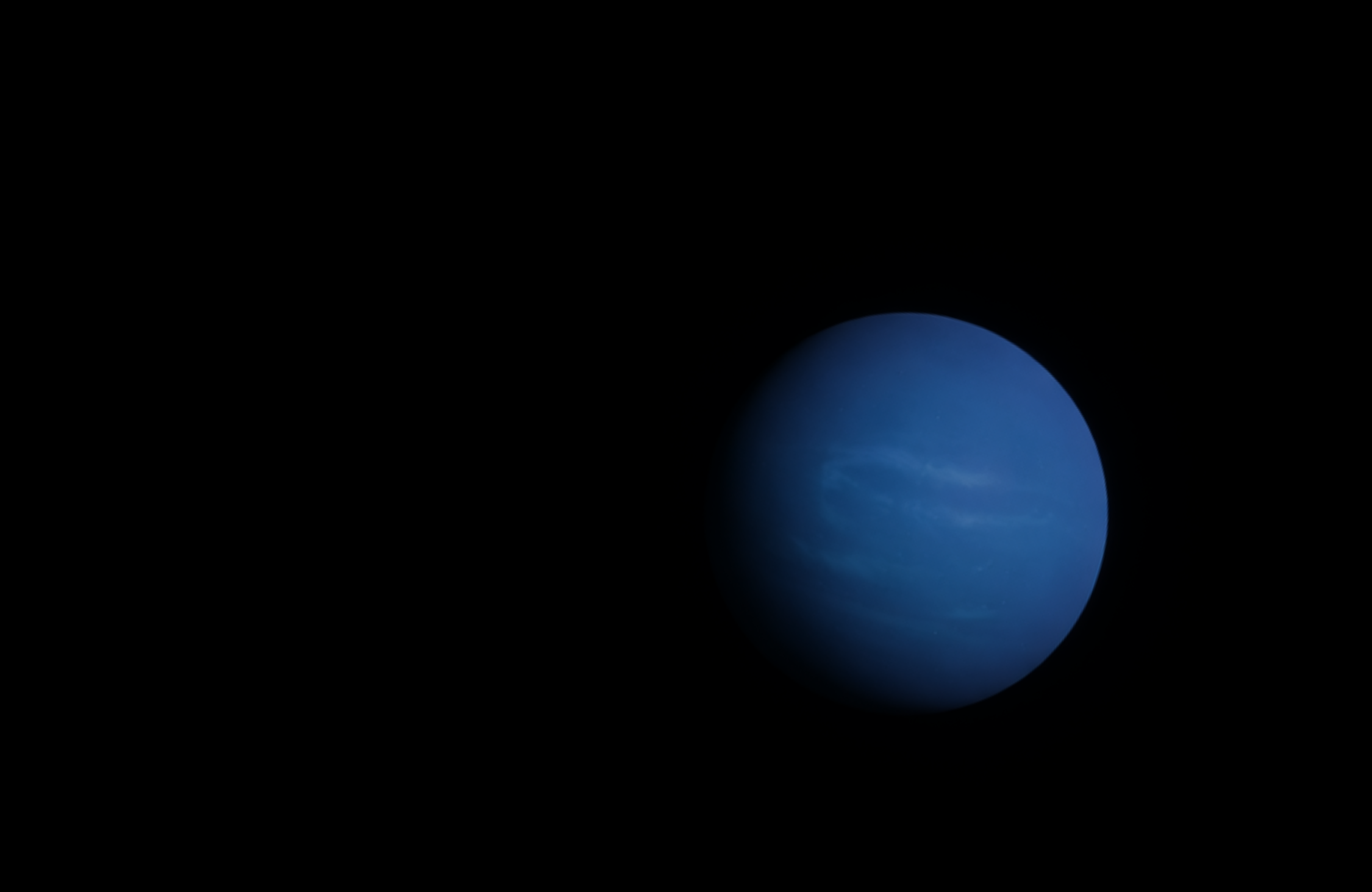
Neptune marking the boundary before deep space (AI-generated)
This region begins just beyond Neptune at around 30 AU and extends to roughly 50 AU from the Sun. It is often compared to the asteroid belt, but this comparison is misleading. The Kuiper Belt is far larger, far more massive, and composed mainly of frozen materials such as water ice, methane, and nitrogen. These objects are remnants from the early solar system—material that never formed into full-sized planets.

Diameter: 2377 km
Orbital Perihelion-Aphelion: 29.7-49.7 AU
Orbital Period: 248 years
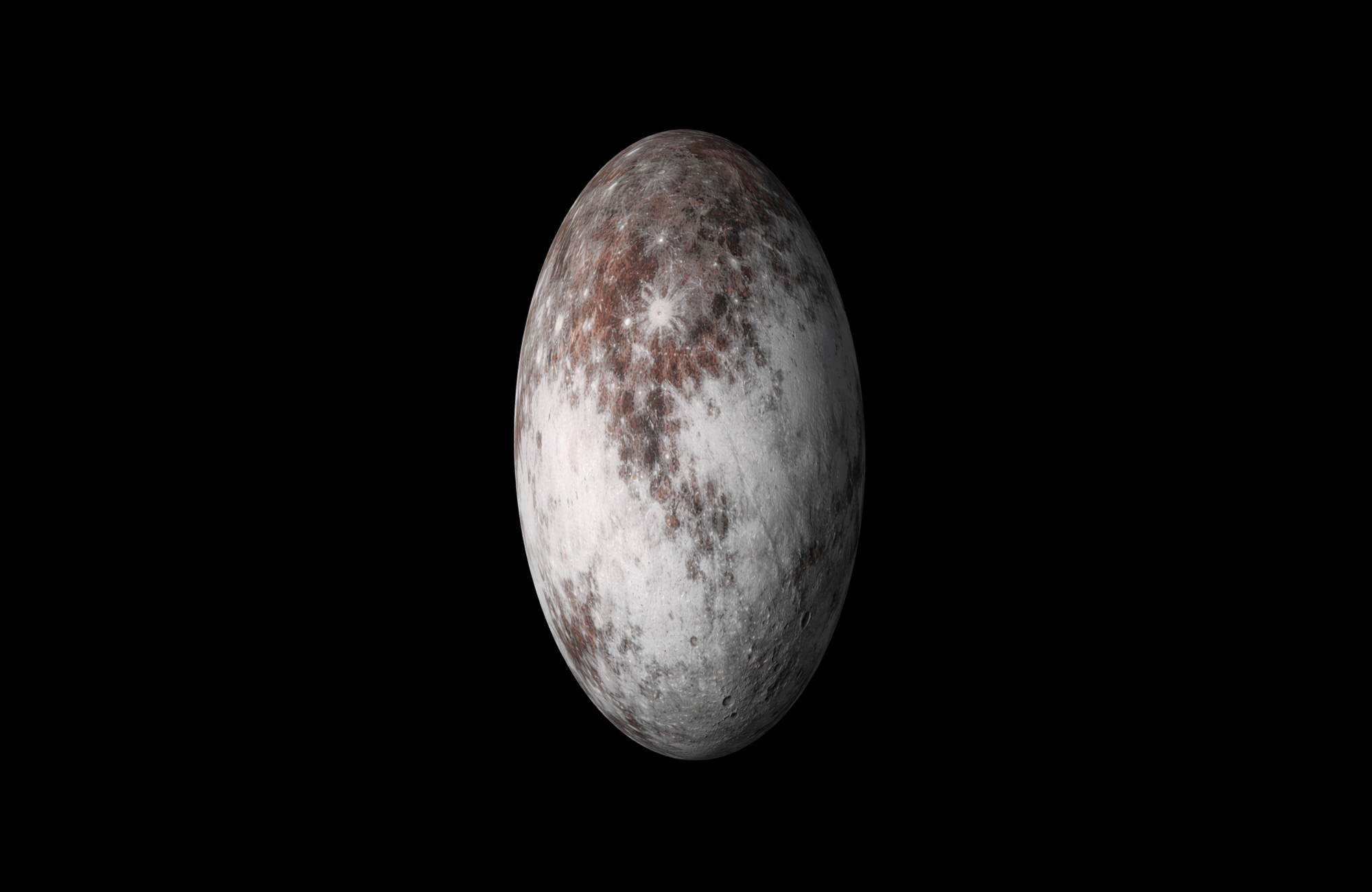
Pluto’s Moons

Diameter: 910 km
Orbital Perihelion-Aphelion: 30.3-48.1 AU
Orbital Period: 247 years
Orcus’s Moon

Diameter: 620 km
Orbital Perihelion-Aphelion: 30.1-49 AU
Orbital Period: 251 years

Diameter: 530 km
Orbital Perihelion-Aphelion: 28.5-50.1 AU
Orbital Period: 248 years
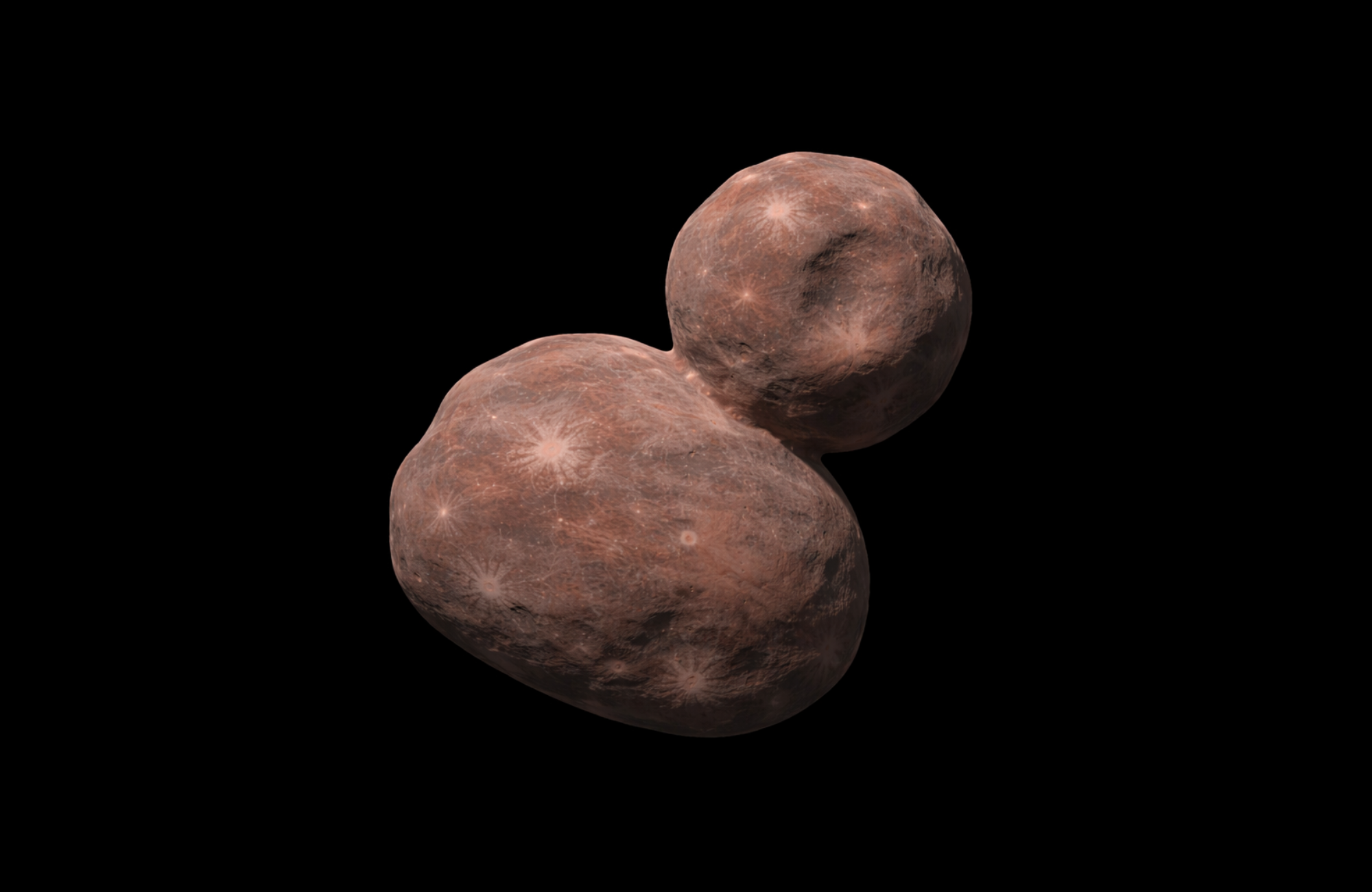
Huya is suspected to have a small satelite but it’s unconfirmed.

Diameter: 668 km
Orbital Perihelion-Aphelion: 40.3-43.5 AU
Orbital Period: 283 years

Diameter: 1110 km
Orbital Perihelion-Aphelion: 41.9-45.0 AU
Orbital Period: 286 years
Quaoar’s Moon

Diameter: 850 km
Orbital Perihelion-Aphelion: 41.9-44.8 AU
Orbital Period: 275 years
Salacia’s Moon

Diameter: 930 km
Orbital Perihelion-Aphelion: 35.5-47.6 AU
Orbital Period: 271 years

Diameter: 700 km
Orbital Perihelion-Aphelion: 39.5-48.6 AU
Orbital Period: 314 years
Varda’s Moon

Diameter: 1430 km
Orbital Perihelion-Aphelion: 38.5-52.8 AU
Orbital Period: 305 years
Makemake’s Moon

Diameter: ? km
Orbital Perihelion-Aphelion: 34.7-51.6 AU
Orbital Period: 284 years
Haumea’s Moon

Diameter: 36 km
Orbital Perihelion-Aphelion: 41.6-45.2 AU
Orbital Period: 298 years
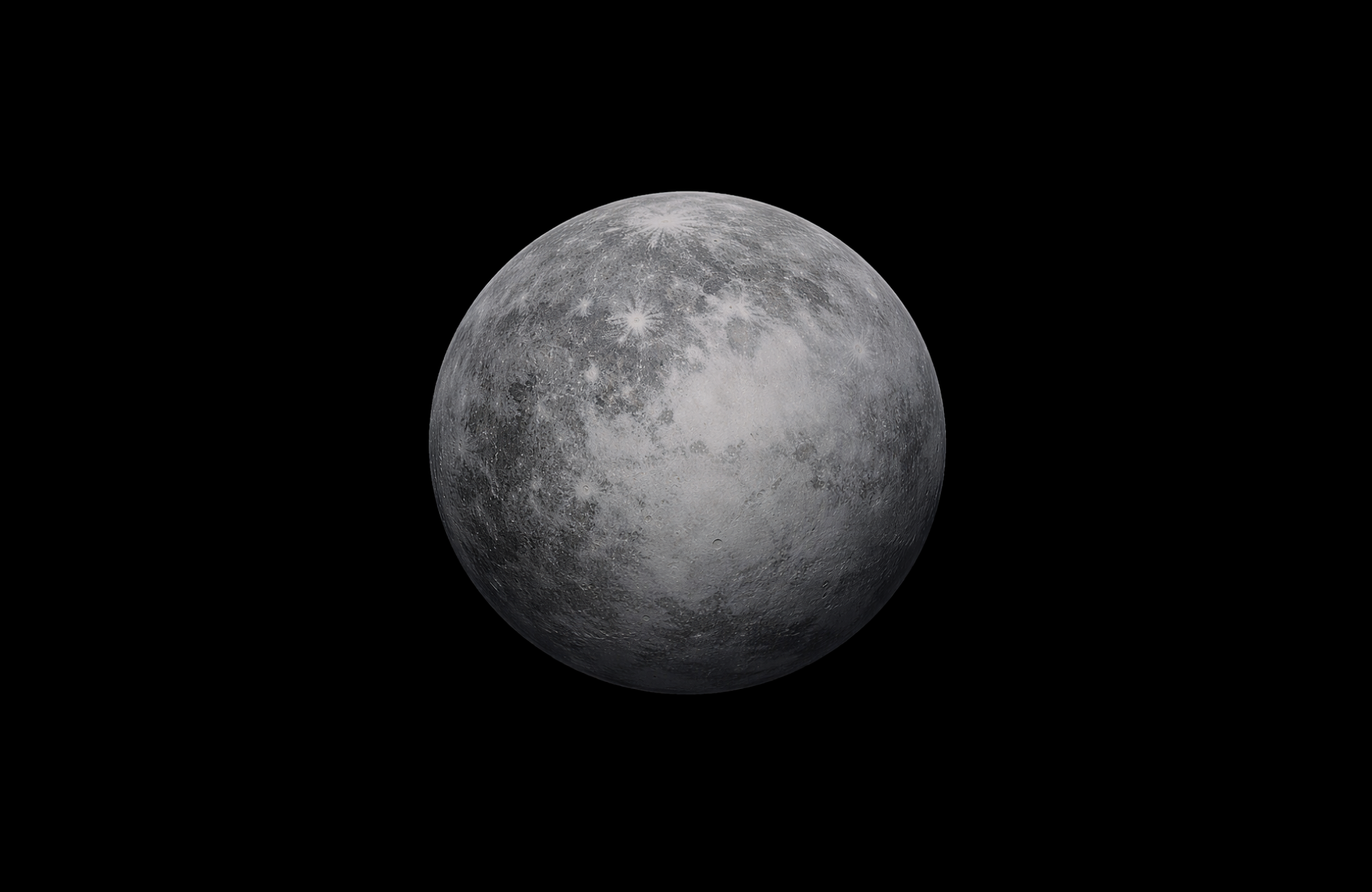
Beyond the Kuiper Belt lies a far more chaotic population of objects known as the Scattered Disk. Although it overlaps the Kuiper Belt in space, it is defined by its extreme orbital behavior rather than its location. Objects in the Scattered Disk follow highly elongated and inclined orbits, often approaching Neptune before traveling hundreds or even thousands of astronomical units away from the Sun.
The Scattered Disk is thought to have formed during the early migration of Neptune. As the planet moved outward, its gravity scattered nearby icy bodies, flinging many onto unstable, stretched orbits. Some were ejected from the solar system entirely, while others remained loosely bound, forming the Scattered Disk observed today.
These objects spend most of their time in the deep outer solar system and only briefly return to regions where they can be detected, making them extremely difficult to observe. Many are likely still undiscovered, simply because they are so distant for most of their orbits that even the most powerful telescopes cannot detect them. In some cases, it may take thousands of years for a scattered disk object to return to its perihelion, where discovery becomes possible.

Diameter: 2326 km
Orbital Perihelion-Aphelion: 38.0-97.6 AU
Orbital Period: 558 years
Eris’s Moons
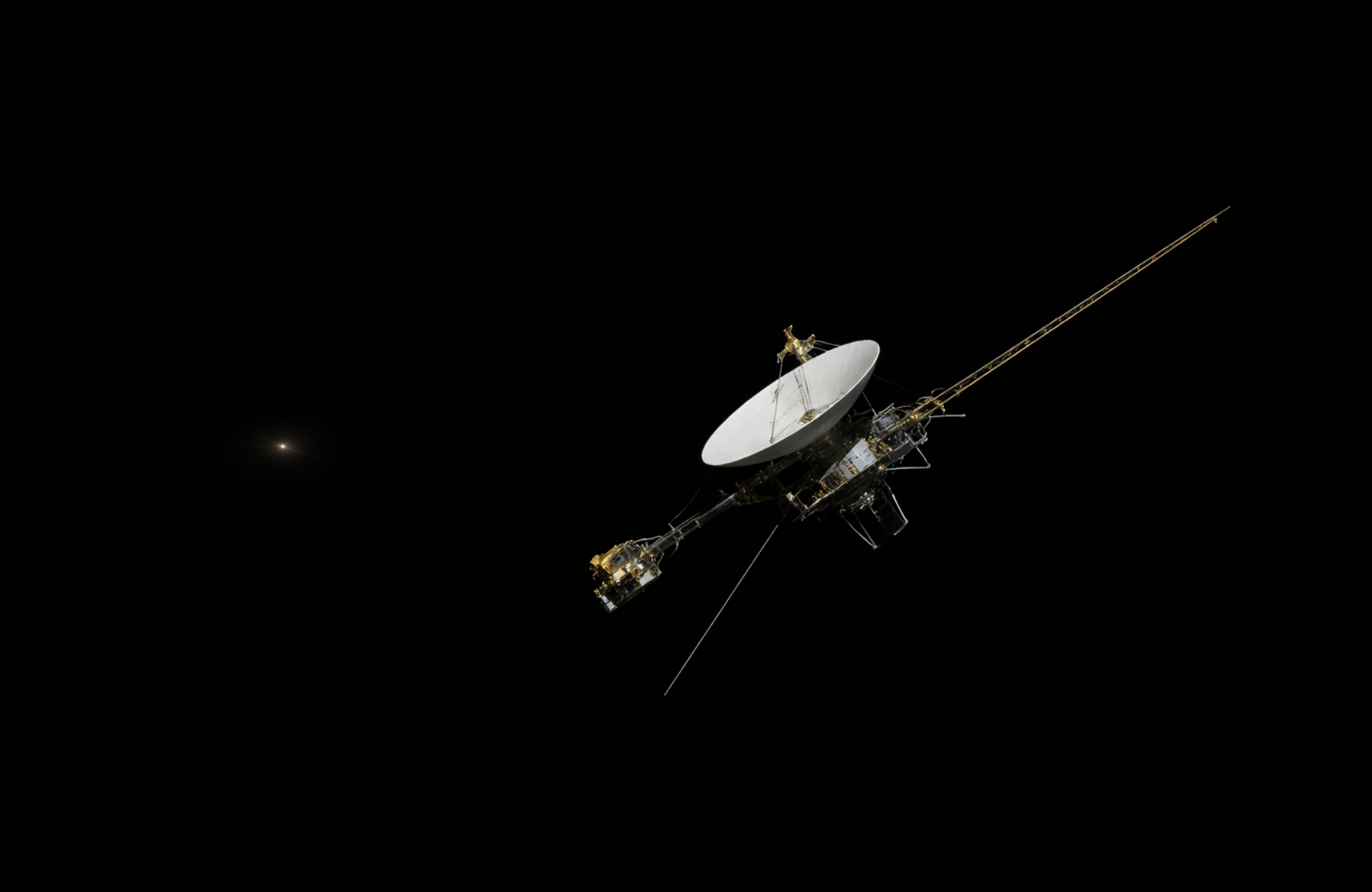
Space probe traveling through deep space (AI-generated)
This is the farthest humanity has ever reached with its technology. Two spacecraft, Voyager 1 and Voyager 2, were launched in 1977, completing historic flybys of the outer planets before continuing outward on escape trajectories that will carry them far beyond the influence of Neptune.
In 2012 and 2018, Voyager 1 and Voyager 2 crossed the heliopause, the boundary where the Sun’s solar wind gives way to interstellar space. By the year 2026, Voyager 1 has reached a distance of approximately 163–165 AU from the Sun, while Voyager 2 is located at roughly 138–140 AU. Even so, traveling at speeds of about 15–17 km/s, the Voyagers will require tens of thousands of years to pass through the inner Oort Cloud region.
Both probes are powered by radioisotope thermoelectric generators that steadily lose energy over time. As power decreases, many scientific instruments have been shut down to conserve electricity, leaving only a minimal set of systems capable of transmitting data back to Earth. Communication signals from Voyager 1 take more than 22 hours to reach Earth, and mission planners expect all contact to cease entirely sometime in the early to mid-2030s.
Even after their instruments fall silent, the Voyager spacecraft will continue drifting outward for millions of years, carrying humanity’s first physical presence into interstellar space.
he Inner Oort Cloud is not a cloud like those in Earth’s sky, but a vast and distant region of space that begins several thousand astronomical units from the Sun. Unlike objects in the Kuiper Belt or the Scattered Disk, bodies in this region follow detached orbits, meaning their perihelia are so distant that the giant planets can no longer significantly influence them.
These objects are only weakly bound to the Sun and are shaped instead by external forces such as passing stars, the galactic tide, or possibly even undiscovered massive bodies in the outer solar system. Because of this isolation, Inner Oort Cloud objects may represent some of the oldest and most pristine material remaining from the early solar system.
Studying these distant bodies offers a rare glimpse into the Sun’s earliest environment, preserving evidence of ancient gravitational interactions that occurred long before the planets settled into their current orbits.
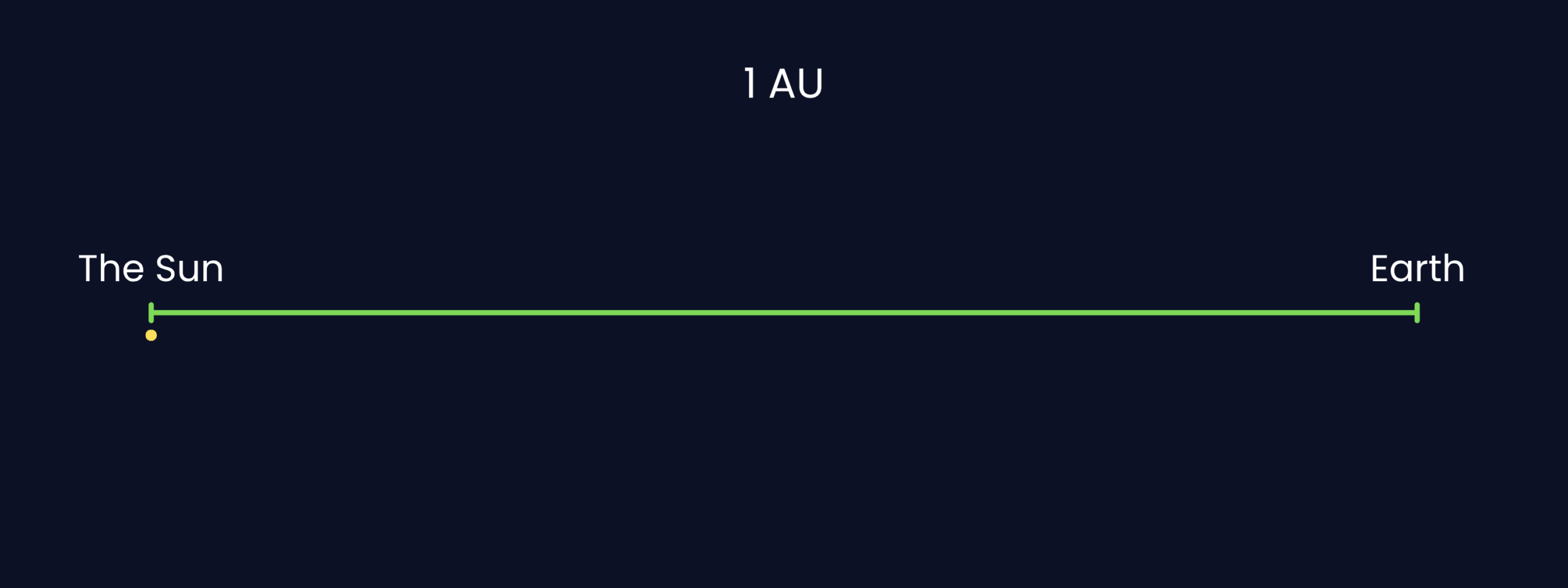
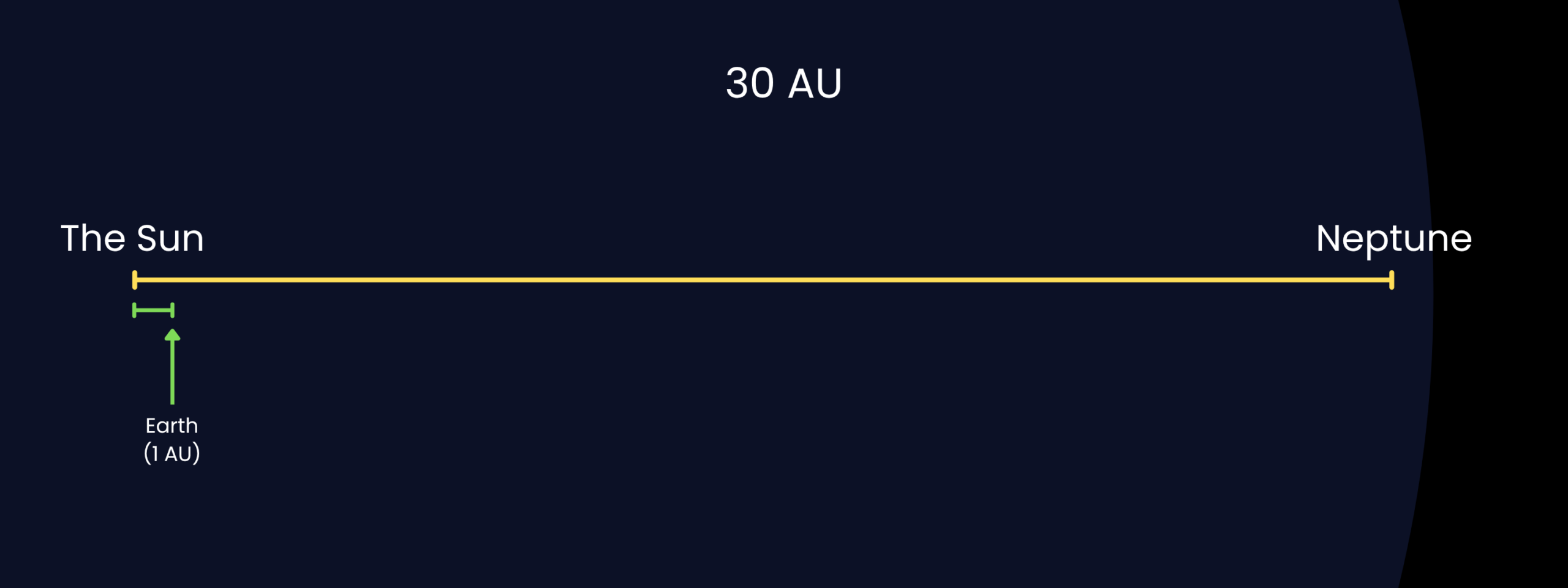
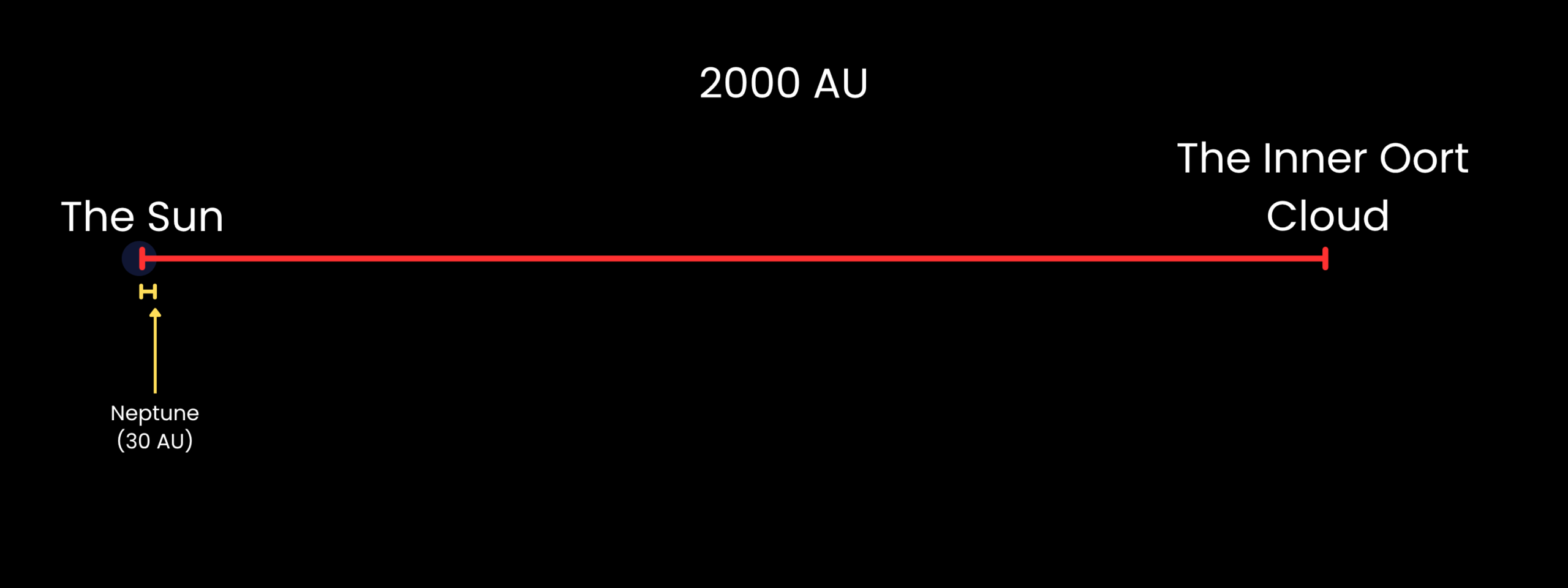
Distances from the Sun: Earth, Neptune, and the Oort Cloud
The following illustrations show the true scale of distances within our solar system.

Diameter: 995 km
Orbital Perihelion-Aphelion: 76-937 AU
Orbital Period: 11 400 years

Diameter: 300 km
Orbital Perihelion-Aphelion: 80-445 AU
Orbital Period: 4,200 years

Diameter: 300 km
Orbital Perihelion-Aphelion: 65-2300 AU
Orbital Period: 40,000 years
The Inner Oort Cloud does not begin at a fixed boundary, but astronomers often place the transition around 2,000 AU from the Sun. Based on this definition, Leleākūhonua is considered one of the strongest Inner Oort Cloud candidates. Its perihelion lies at approximately 2,300 AU, and a single orbit around the Sun takes more than 40,000 years, surpassing both 2012 VP113 and Sedna by a wide margin.
Far beyond the most distant objects ever detected, such as Leleākūhonua, lies the Outer Oort Cloud—a vast, spherical halo of icy bodies extending tens of thousands of astronomical units from the Sun. Here, gravity is weak, time moves slowly, and a single orbit can take millions of years to complete.
No spacecraft has ever reached this region. Its existence is inferred only through the sudden arrival of long-period comets, briefly illuminated as they pass through the inner solar system before returning to darkness. At these distances, passing stars and the gravity of the Milky Way shape orbits as much as the Sun itself.
The Outer Oort Cloud is not a sharp boundary, but a fading one. It marks the place where the solar system gradually dissolves into interstellar space, and where the Sun becomes just another distant star among billions.
Who knows what exists in the dark and lonely outskirts of this solar system.
Sedna is not officially classified as a dwarf planet. While it is large enough to be nearly spherical, its size and mass are still uncertain, and it has not yet been formally evaluated by the International Astronomical Union. It is currently classified as a detached trans-Neptunian object.
There is no sharp physical edge to the solar system. Instead, it gradually fades outward from the planets, through the Kuiper Belt and Oort Cloud, until the Sun’s gravity becomes indistinguishable from the background gravity of the Milky Way.
No. The Oort Cloud does not have a defined outer boundary. Its density slowly decreases with distance, blending smoothly into interstellar space rather than ending abruptly.
As of 2026, Voyager 1 is approximately 163–165 AU from the Sun, while Voyager 2 is about 138–140 AU away. Both are traveling through interstellar space beyond the heliopause.
Astronomers often place the beginning of the Inner Oort Cloud at around 2,000 astronomical units from the Sun, where planetary gravity no longer dominates orbital behavior.
Not technically. Objects in the Oort Cloud are still gravitationally bound to the Sun, although very weakly. It represents a transition zone between the solar system and true interstellar space.
Leleākūhonua has a perihelion of about 2,300 AU and an aphelion that may extend well beyond 2,000 AU, making it one of the most distant known objects still bound to the Sun. One orbit takes over 40,000 years.
The Sun’s gravitational influence may extend up to 100,000 AU, or nearly two light-years, overlapping with the gravitational influence of nearby stars. Beyond this distance, objects are no longer meaningfully bound to the Sun.
Aphelion – The farthest point in an object’s orbit from the source of its gravitational pull
Astronomical Unit (AU) – The average distance between Earth and the Sun, used to measure vast distances in space where kilometers become impractical
Galactic Tide – The gravitational influence of the Milky Way that affects extremely distant objects in the outer solar system
Perihelion – The closest point in an object’s orbit to the source of its gravitational pull
Radioisotope Thermoelectric Generator – A long-lasting power source that converts heat from radioactive decay into electricity for deep-space probes
Solar Wind – A continuous stream of charged particles flowing outward from the Sun into space
Trans-Neptunian Object – Any object that orbits the Sun beyond the orbit of Neptune
Last updated: 2026-04-04